Nutrition • 6 minutes • Veronica Paddy
A round of golf is a 4 to 5 hour low-to-moderate intensity event with bursts of high-precision movement. Energy demand is real, but it is not the same as a marathon or a soccer match. Your nutrition strategy should match the sport. Most golfers either over-fuel and feel sluggish, or under-fuel and fall apart on the back nine.
Here is a practical, evidence-based plan you can apply to your next round.
The night before
Eat normally. Do not load up on pasta. A balanced dinner with lean protein, complex carbohydrates such as rice or potato, and vegetables is plenty. Drink a glass of water with dinner and another before bed. Sleep is the single highest-leverage performance variable, and most amateur rounds are quietly sabotaged by a 6-hour night.
90 to 120 minutes before tee-off
This is your main pre-round meal. Aim for around 400 to 600 kilocalories, with the focus on slow-release carbohydrates and moderate protein. Examples that work well:
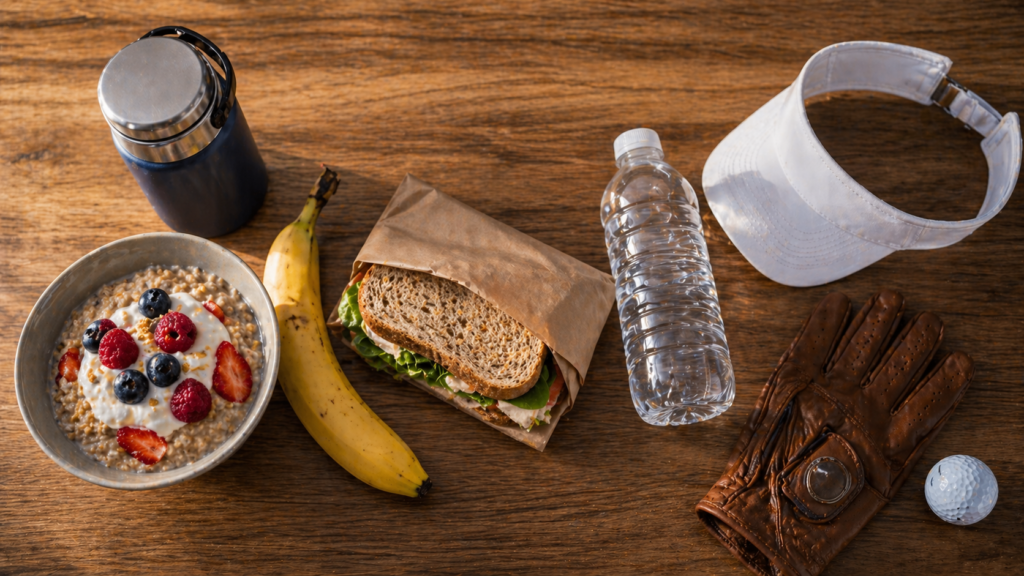
- Oats with berries, Greek yoghurt, and a tablespoon of honey
- Two eggs on whole-grain toast with avocado
- Chicken or biltong on rye with a banana
Avoid anything very high in fat or fibre right before play. Both slow digestion and can leave you heavy through the first few holes.
During the round
Your goal on-course is steady blood sugar, not a sugar rush. Eat small amounts often. A useful rule of thumb is something light every 4 to 6 holes.
- Hole 4 to 6: a banana or a small handful of trail mix
- Hole 9 to 10 (turn): a wholesome snack such as a wrap, a protein bar, or a small sandwich
- Hole 13 to 15: another piece of fruit or a small handful of nuts
This is where most golfers go wrong. They eat a heavy burger and chips at the turn, then wonder why their tempo falls apart on 13. If you are going to eat a full meal at the turn, slow down for ten minutes after eating before you tee off.
Caffeine and alcohol
A cup of coffee 60 to 90 minutes before tee-off can sharpen focus and reaction time. Two or three cups can do the opposite, especially if you are sensitive. Alcohol on the course is a personal choice, but the science is clear: even one beer measurably reduces fine motor coordination and judgement of distance, and it accelerates dehydration. Save the celebration for the 19th hole.
After the round
Within an hour of finishing, eat a meal with a 3:1 ratio of carbohydrate to protein. This window matters most if you are playing or training again the next day. A toasted chicken sandwich with fruit, or a rice bowl with grilled protein and vegetables, does the job.